
On 30 September at 9:59 p.m. local time, a magnitude 6.9 earthquake with a shallow depth of 5 kilometers struck off the coast of Bogo City, Cebu province. The tremor prompted the Philippine Institute of Volcanology and Seismology (PHIVOLCS) to issue a tsunami alert, which was lifted in the early hours of 01 October. PHIVOLCS has since recorded 349 aftershocks ranging from magnitude 1.4 to 4.8, which are expected to continue in the coming days.
There are 56 reported deaths and 201 injuries, mostly in Bogo City, Medellin, and San Remigio as per Cebu Provincial Disaster Risk Reduction and Management Council (PDRRMC), 12:00 noon report. Figures are still subject to verification by the national government and are expected to rise as more reports are received. According to the DSWD DROMIC report as of 6:00 PM on October 1, over 111,600 individuals have been affected, with more than 20,000 displaced, mostly are staying outside evacuation centers. Based on the 2024 census, the four most affected municipalities and cities (Bogo, Daanbantayan, Medellin, San Remigio) have a combined population of over 315,000 people.
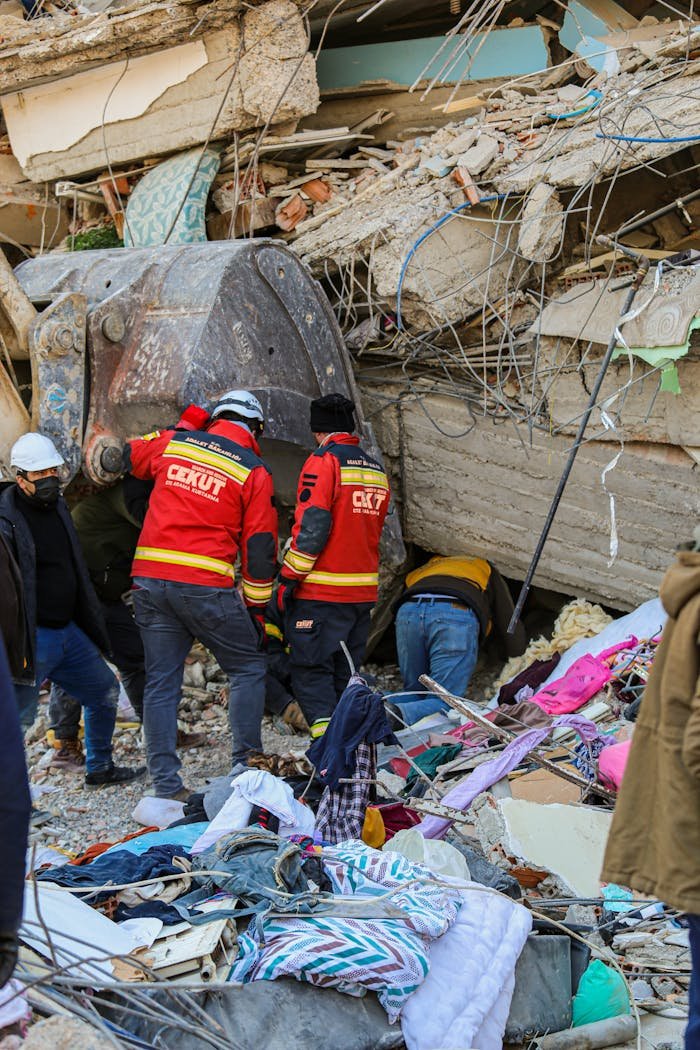
Initial reports indicate widespread damage to homes, churches, public buildings, roads, and ports. Many displaced families are sheltering in front of their houses and in open spaces due to the ongoing aftershocks. (OCHA, 1 Oct 2025)
As reported by the National Disaster Risk Reduction and Management Council (NDRRMC) on 2 October, the earthquake has caused at least 72 fatalities in Cebu province, with 294 individuals injured and 170,959 people affected overall. Among those impacted, approximately 20,000 have been displaced. Infrastructure damage is extensive, including the destruction or damage of 597 homes, six bridges – with four bridges damaged and six entirely destroyed – and three blocked roads. Additionally, 85 cities or municipalities in the region have experienced power outages. A state of calamity has been declared for 53 municipalities. (ECHO, 2 Oct 2025)
The National Disaster Risk Reduction and Management Council (NDRRMC) reports that, as of 3 October, 68 fatalities, 559 injured people, 77,022 displaced individuals, and a total of 366,360 affected people were recorded across 14 cities or municipalities in Cebu province. Additionally, a total of 5,013 houses, at least 335 infrastructures, and 11 bridges have been damaged, with 89 cities or municipalities experiencing power outages. Classes have been suspended in 113 municipalities, and there are 53 municipalities under a state of calamity. (ECHO, 3 Oct 2025)
According to the National Disaster Risk Reduction and Management Council (NDRRMC), over 455,800 people (129,900 families) were affected, with more than 26,500 people still displaced and 72 reported fatalities. […]As of 06 October, 47% of affected municipalities have restored power while 41% have restored communication. The Government, through the NDRRMC and Department of Social Welfare and Development (DSWD), is leading response operations, including distribution of food, non-food items (NFI) and shelter assistance, alongside a 60-day price freeze on basic goods. (OCHA, 8 Oct 2025)
According to the NDRRMC, the doublet earthquake and associated landslides have resulted in eight deaths, 403 injuries, and about 8.9K displacements, affecting approximately 520K people (132K families) across Davao and CARAGA Regions. Reported damages include around 2K houses (298 totally damaged), as well as nine bridges and 37 road sections affected. (AHA Centre, 13 Oct 2025)
After the earthquakes of 7.4 M and 6.8 M that occurred on 10 October east of the coast of Mindanao Island, southern Philippines, the humanitarian impact is still increasing. NDRRMC reports 12,960 displaced people, 12,768 of whom are in eight evacuation centres, and a total of more than 845,000 affected people across the Davao and the Caraga regions. (ECHO, 14 Oct 2025)