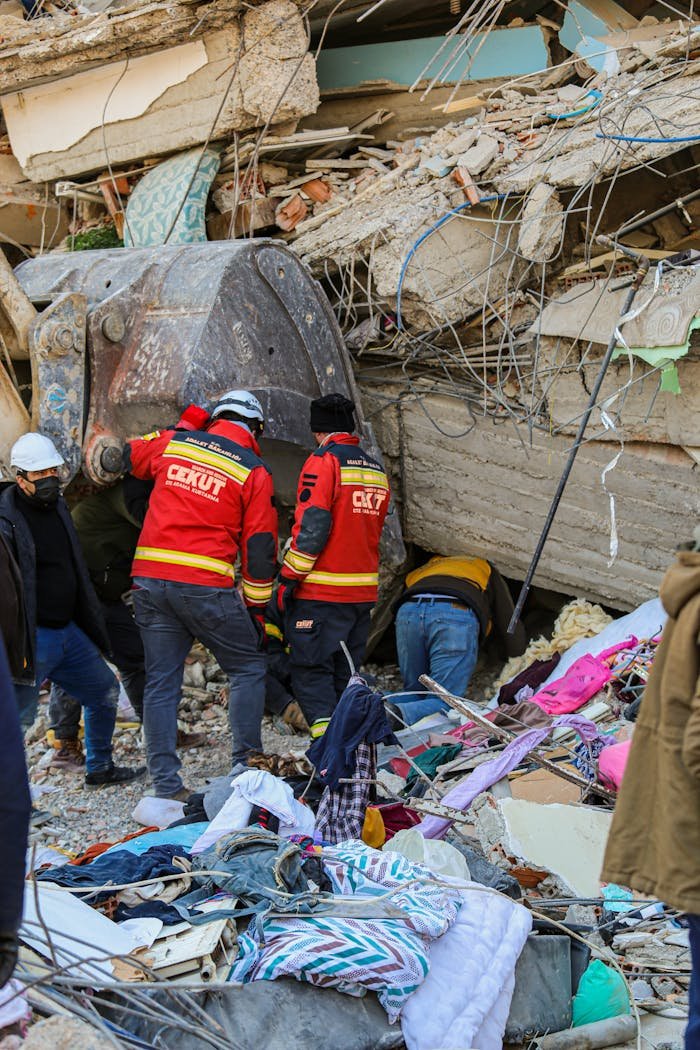

On 31 August 2025 at 23.47 local time, a 6+ magnitude earthquake struck Afghanistan’s Nangarhar Province near the Pakistan border. The epicenter was located in Kama district, some 30 km northeast of the city of Jalalabad. Several aftershocks have occurred since, with the initial quake felt in neighbouring provinces including Kunar, Laghman and Nuristan, as well as Kabul. The quake’s hypocenter was estimated at only 8 to 10 km beneath the surface, exacerbating the quake’s impact. Preliminary reports indicate that at least 800 people have been killed across four provinces – Kunar, Laghman, Nangarhar and Nuristan – with a further estimated 2,000 people injured, many of them residing in deeply remote and mountainous areas with key access routes blocked by rocks and landslides. Initial figures indicate up to 12,000 people are directly affected, with Chawkay and Nurgal districts in Kunar Province and Dara-e-Nur district in Nangarhar Province the most impacted. In addition, Chapa Dara, Dara-e-Pech and Watapur districts in Kunar Province; Alingar, Mehtarlam and Qarghayi districts in Laghman Province; and Jalalabad city, Behsud and Kuz Kunar districts in Nangarhar Province have also sustained loss of life and severe damage. Casualty figures are expected to rise as search and rescue teams reach affected areas. (OCHA, 1 Sep 2025)
Search and rescue efforts are ongoing with the de facto authorities (DfA) now reporting just over 1,400 people killed, a further 3,100 injured and up to 5,400 homes destroyed. 25 inter-agency assessment teams reached some of the affected areas late afternoon on 1 September with initial indications that needs are both widespread and severe: assessment teams are endeavouring to verify initially reported figures.(OCHA, 2 Sep 2025)
The humanitarian impact of the 6.0 M earthquake that struck north-eastern Afghanistan on 31 August at 19:17 UTC (23:47 local time) continues to grow. The epicentre was located approximately 27 km northeast of Jalalabad City in Nangarhar Province. According to UN OCHA and IOM, as of 3 September, 1,457 people have died, 3,394 have been injured, and 6,782 houses have been destroyed. The most severely affected districts include Nurgal and Chawkay (Kunar Province), Dara-e-Nur (Nangarhar Province), and parts of Laghman Province. Furthermore, approximately 497,000 people are affected, of whom 263,000 are children. Humanitarian partners and de facto authorities are conducting response efforts. Access remains challenging due to the mountainous terrain, blocked roads, landslides, and limited communication infrastructure. (ECHO, 4 Sep 2025)
Initial reports from joint field assessments completed in 25 villages across five districts (Chapa Dara, Chawkay, Dara-e-Pech, Nurgal and Watapur) in Kunar Province, two districts (Dara-e-Nur and Kuz Kunar) in Nangarhar Province and one district (Alingar) in Laghman Province indicate that 2,924 families (17,051 people) have been affected with 1,368 people killed (373 women, 299 men, 374 girls and 322 boys), a further 2,180 injured (1,212 females and 968 males) and 2,924 homes destroyed (2,627) and damaged (297) in these areas alone. Numbers are expected to continue to rise as assessment data is received; a further 22 assessment teams were deployed today. Overall, the de facto authorities (DfA) are now reporting 2,205 people killed, a further 3,640 people injured and 6,700 homes destroyed and 84,000 people affected. (OCHA, 4 Sep 2025)
A new strong earthquake of 5.6 M at a depth of 10 km occurred in the Kunar province, north-eastern Afghanistan on 4 September at 16:56 UTC (21:26 local time). The epicentre was located very close – approximately 1 km south – to the 6.0 M earthquake that occurred around 27 km north-east of Jalalabad city, Nangarhar province on 31 August at 19:17 UTC. For this new event – part of the seismic sequence which started on 31 August – USGS PAGER estimates that up to 85,000 people were exposed to strong shaking and 411,000 to moderate shaking. Aftershocks continue. (ECHO, 5 Sep 2025)
As of 8 September, repeated quakes have further displaced 783 families to Shalt and Zere Baba area of Nurgal district, where women, girls, and children face increased protection risks due to unsafe conditions and limited services. Nurgal and Chawkay districts in Kunar, Dara-e-Nur in Nangarhar province, and parts of Laghman province were hit hardest, further compounded by another strong quake on 4 September. Damaged mountain roads severely limit access, making air transport the only reliable option. A joint IOM, WFP, and OCHA field observations on 6 September 2025 to Nurgal district confirmed widespread destruction, rising community tensions, damaged irrigation systems, and heightened flood risk, underscoring the urgent need for scaled up support. (IOM, 8 Sep 2025)
The reported number of people killed and injured has risen further, with 2,164 people confirmed killed, and a further 3,428 injured. Numbers are expected to continue to rise as assessments continue across in four villages. As of 8 September, an estimated 2,620 earthquake-affected families have arrived in three informal settlements that have been formed in Patan (1,000) and Zirai Baba (720) villages in Nurgal District and Khas Kunar District (900). […] On 9 September, the UN launched a USD$139.6 million emergency response plan to assist 457,000 people through the end of the year. (OCHA, 10 Sep 2025)
As of 15 September, of the 8,489 families assessed thus far, 7,716 families (90 per cent) are currently sheltering in open space, exposed to the elements and the cold. The damage to water and sanitation infrastructure is extensive with more than 130 water sources reported damaged and destroyed across the 134 assessed villages. Due to the damage to water and sanitation infrastructure, 112 communities are currently practicing open defecation, 104 communities have no hand washing station available and 107 communities report a lack of hygiene-related NFIs such as soap. Considering that cholera is already endemic in the region, a rise in the number of cases already observed pre-quake since mid-July and with severe shortages of essential hygiene and sanitation NFIs recorded in the affected areas, humanitarian partners remain concerned for a wide-spread outbreak of Cholera and other waterborne diseases. Across the affected areas, 90 community-based education (CBE) classes and 24 public schools in Nangarhar (10) and Kunar (14) provinces were damaged or destroyed by the earthquake, affecting the education of 2,434 children. (OCHA, 16 Sep 2025)
Three weeks after the 31 August earthquake, eastern Afghanistan remains in crisis. The IOM-led Multi-Sector Rapid Assessment (MSRAF), completed on 18 September, surveyed 134 of the hardest-hit 411 villages. Findings confirm that more than 77,000 families (502,000 people) are affected, with 8,496 homes destroyed or damaged and widespread loss of food stocks, livestock, and farmland. As of 20 September, UNICEF-supported facilities have treated nearly 4,600 trauma cases, including 916 women and 812 children, with 330 major surgeries conducted. Seven makeshift health facilities provided 15,000 consultations, and 200 deliveries were safely managed. In parallel, 2,500 children have been vaccinated against measles and polio. (UNICEF, 21 Sep 2025)
Humanitarian response is ongoing following the 6+ magnitude earthquake that struck the eastern region of Afghanistan on 31 August, and significant aftershocks on 2, 4 and 23 September. Multi-sector needs assessments have now been completed in 134 of the 411 hardest-hit villages – that is, those that experienced levels 7 and 8 shaking on the Modified Mercalli Scale (MMI). Needs assessments have verified 8,471 families in the assessed villages were directly impacted by the earthquake (almost 56,000 people), with 1,992 people killed (52 per cent women and girls), 3,631 people injured (54 per cent women and girls) and 8,471 homes destroyed or damaged. Over 3,000 families currently reside in at least five major sites for internally displaced people (IDP) across two districts, with many smaller areas of displacement across the entire earthquake affected area. While several of the IDP sites are along the Kunar River basin and relatively accessible, several are in mountain valleys with limited access. With some 94 per cent of families living in open space/makeshift shelters with temperatures dropping as winter approaches, there is a critical need for winterization and shelter support in high-altitude areas to prevent further displacement. Additionally, the earthquake killed more than 7,000 livestock with 96 per cent of affected households have lost food sources. (OCHA, 25 Sep 2025)
While some road access and infrastructure repair has begun, the pace of reconstruction remains slow, and many people are continuing to leave isolated areas to reach assistance in areas closer to the Kunar River valley and main roads. As a result, the temporary settlements established in Kunar Province, including in Patan and Zerai Baba villages in Nurgal District, on the Khas Kunar Military Base and three in Undarlachak and Dewagal Valley of Chawkay District, have expanded. […] With temperatures now falling, and intense rainfall causing flooding in the displacement sites and surrounding areas in the
week of 4 October, the conditions in the displacement sites remain extremely challenging. Despite this, many people are unlikely to return to their homes to complete repairs or reconstruction before Spring. (OCHA, 9 Oct 2025)